


About Yen Tu
History
According to historical records, Yen Tu is one of the “four sacred lands” of Vietnam.
The mountain became even more sacred when sages, monks, and wise people came to meditate here, further enriching its tradition, spirit, and energy of righteous practice. As early as the 3rd century BCE, a sage named An Ky Sinh ascended the mountain to practice immortality, heal the sick, and save people. The ancients revered him, calling him An Tu and named the mountain An Tu Son, which is now known as Yen Tu.

Yen Tu - The Buddhis capital of Vietnam
As a famous landmark throughout the history of Vietnam, the sacred land of Yen Tu carries the imprints of time through the Ly, Tran, Le, and Nguyen dynasties.
In the 13th century, the wise King Tran Nhan Tong abdicated the throne, went to Yen Tu to practice, attained enlightenment, and became the founding Patriarch of the Truc Lam Yen Tu Zen sect—a Vietnamese-influenced school of Buddhism that aimed to build a prosperous nation with virtuous ideals. Since then, Yen Tu has been regarded as the Buddhist capital of Vietnam.


Discover the beauty of Yen Tu
The majestic nature combined with the unique architecture creates an ancient scene in Yen Tu, imbued with the colors of time and the beauty of the "Vietnamese soul - Trần legacy - Truc Lam Zen spirit."

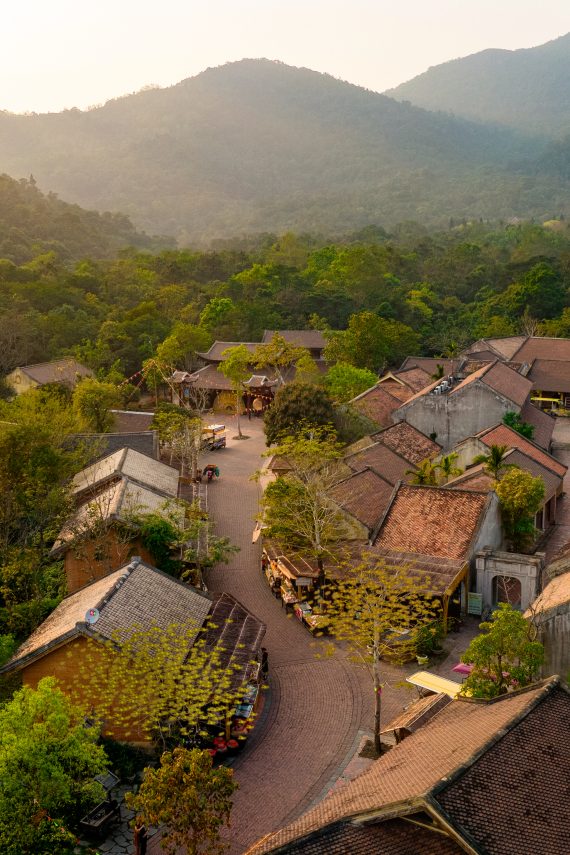


Experience the four seasons in Yen Tu

Spring
Spring – the season that marks the beginning of a new year and also the time for the traditional Yen Tu Spring Festival, lasting for three months, welcoming pilgrims and tourists to come here to express their devotion and pray for a peaceful new year filled with good fortune and smooth endeavors.
In spring, the mountains and forests undergo a transformation, donning a “garment” of vibrant colors from the blooming flowers, plants, and trees. What makes it even more special is the golden “royal robes” of the centuries-old yellow apricot blossoms, which bloom profusely along Yen Tu Mountain. This is one of the rare and beautiful moments, as the yellow apricot flowers only bloom around the beginning of the third lunar month and last for just a short week.

Summer
Summer is the time when the trees in Yen Tu are dressed in a fresh, vibrant green, and the streams are full of water, creating lively melodies. This is also the season when Yen Tu becomes especially bustling and dynamic with activities such as summer camps, retreats, meditation courses, and team-building events.
In the summer, the atmosphere in Yen Tu is mild and not as hot and stuffy as in the cities. Visitors have the opportunity to embrace nature, surrounded by the shade of trees, the sound of birds singing, and the coolness of the streams.

Autumn
As nature gradually “transforms,” the autumn in Yen Tu carries with it a gentle, tranquil, and peaceful beauty.
This is also one of the most beautiful times of the year, with cool weather and the golden hues of late autumn sunsets that always stir the emotions of visitors who come here.

Winter
When winter arrives in Yen Tu, visitors have the opportunity to experience the characteristic sweet cold of the North. At the peak of Dong Pagoda, there are times when snow and ice form – a phenomenon that anyone would want to witness at least once in their lifetime.
The nature during this season is serene yet still full of vitality. For those with an artistic soul, the winter nature of Yen Tu seems to whisper, comfort, and embrace people in its quiet, loving way.


