


The tour guide welcomes guests, provides a summary of the group’s itinerary, and offers necessary information.
Location: Khai Tâm Gate (Arrival Reception) / Làng Nương Reception / Legacy Yên Tử – MGallery Reception
Nestled along the pristine Giai Oan stream, resembling a fairy tale land, Yen Tu Village evokes memories of the ancient village of the same name that once existed at the foot of Yen Tu Mountain in Lam Tuyen (the forest-edge stream) since the 13th century. The village is steeped in the epic legend of the royal concubines during the Tran dynasty. These women followed the Emperor when he came to Yên Tử in the autumn of 1299, but had to bid him farewell and remained in Yen Tu Village when they could not accompany him up the mountain on his spiritual journey. Today, Yen Tu Villagebears the characteristics of a traditional Northern Vietnamese village, offering accommodations, local cuisine, and cultural experiences such as the “Village Festival Night,” along with traditional craft products and artisan experiences.

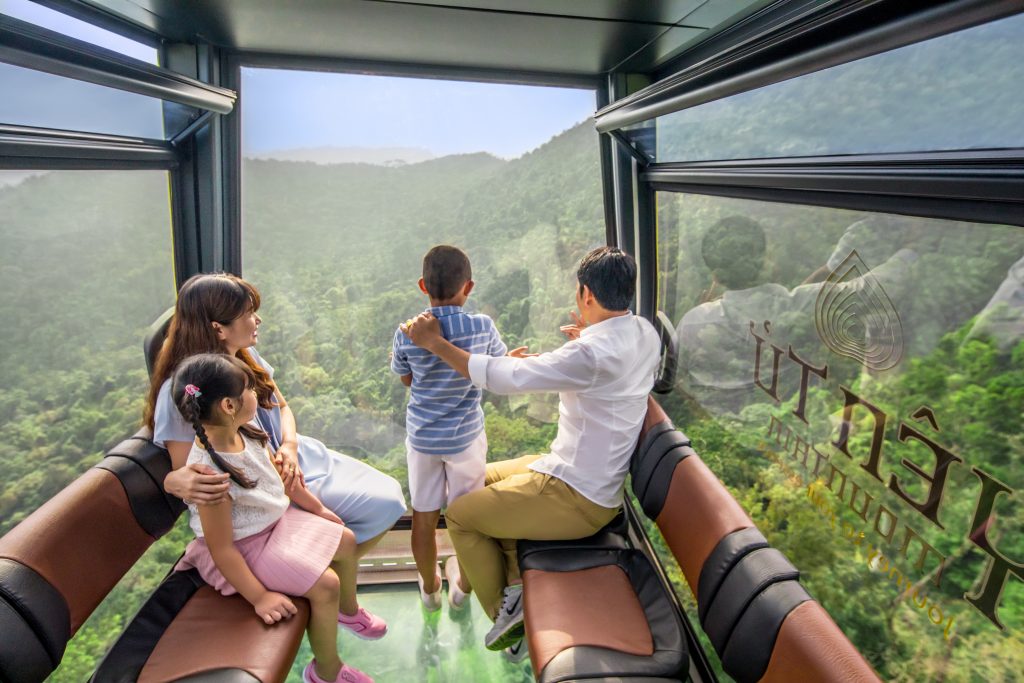
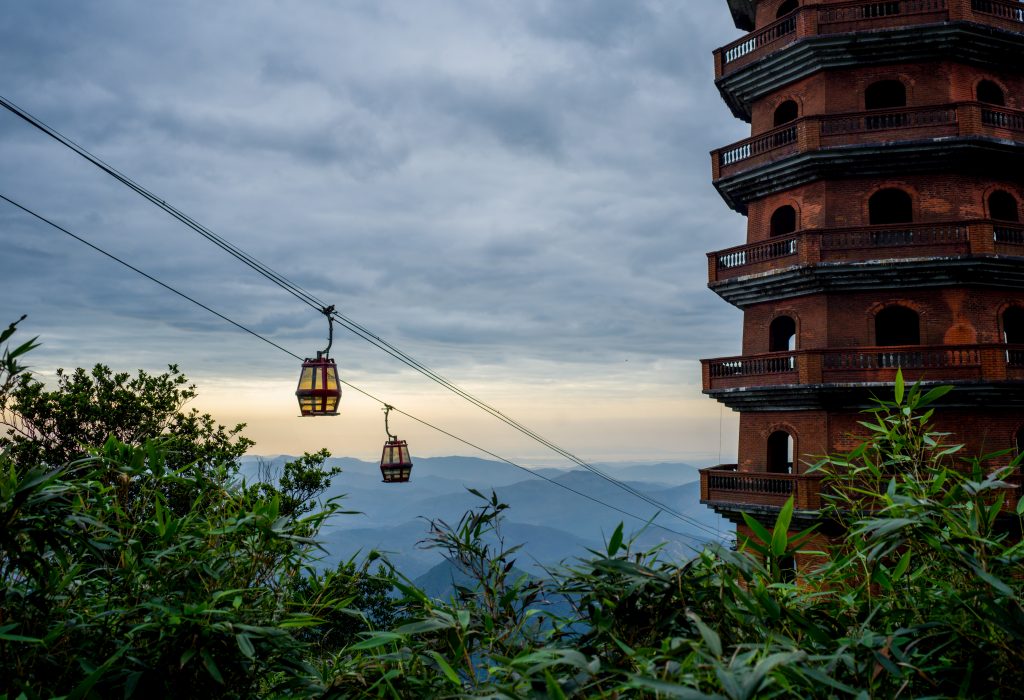
The Hoàng Long aerial tramway, branded by POMA (France), meets European Aviation Safety Standards. Particularly, the cabins offer a 360-degree panoramic view, providing visitors with an inspiring journey as they glide over layers of lush vegetation, with vibrant flowers and greenery throughout the four seasons of the Yên Tử mountain range.
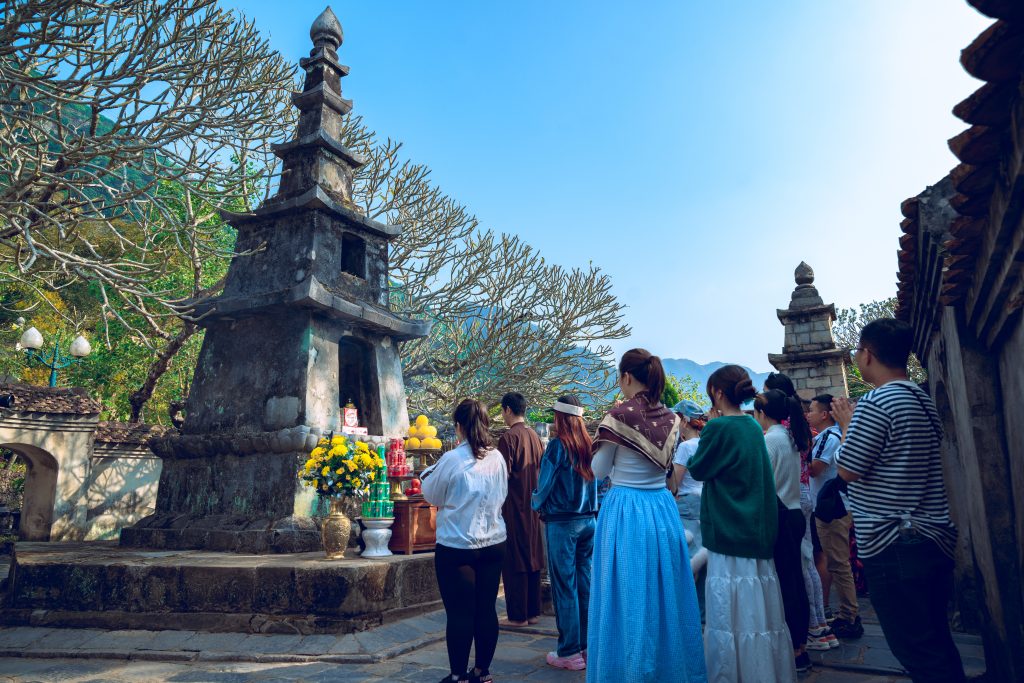
Huệ Quang Stupa Garden is the place where the sacred energy of Yên Tử’s dragon vein converges. The garden houses the stupas of Zen masters who practiced at Yên Tử during the Trần, Lê, and Nguyễn dynasties.
At its center stands the Huệ Quang Kim Tháp (also known as the Patriarch’s Stupa), which was built in 1309 by King Anh Tông to enshrine Buddha-Emperor Trần Nhân Tông.
The stupa still retains its original base from the Trần dynasty, while the body was restored during the Lê period. Inside is a sacred statue of the King–Monk, recognized as a national treasure, and a relic of the Master is enshrined within the stupa.
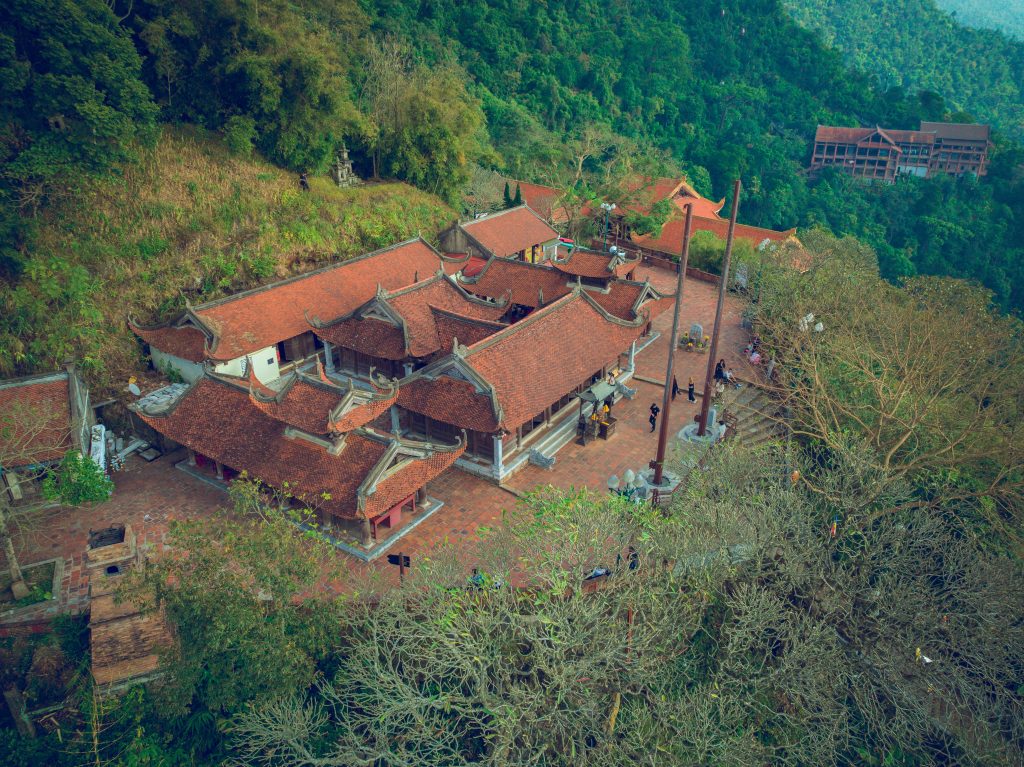
Located at an altitude of 535 meters above sea level, Hoa Yên Pagoda is an ancient temple founded during the Lý dynasty and holds the most central and significant role among the pagodas and stupas within the Yên Tử Relic and Scenic Complex.
It is the place where generations of patriarchs of the Yên Tử Zen lineage practiced, attained enlightenment, taught the Dharma, and passed on their teachings—beginning with the First Patriarch, Zen Master Hiện Quang of the Lý dynasty.
Buddha-Emperor Trần Nhân Tông, regarded as the Sixth Patriarch in this lineage, later founded and became the First Patriarch of the Trúc Lâm Zen Sect.
Originally named Vân Yên Pagoda, the temple was renamed Hoa Yên by King Lê Thánh Tông after he admired the lush and beautiful scenery of the site. Together with Vân Tiêu Pagoda and Ngọa Vân Hermitage, Hoa Yên Pagoda forms the spiritual core of the Trúc Lâm Zen Buddhist sanctuary.
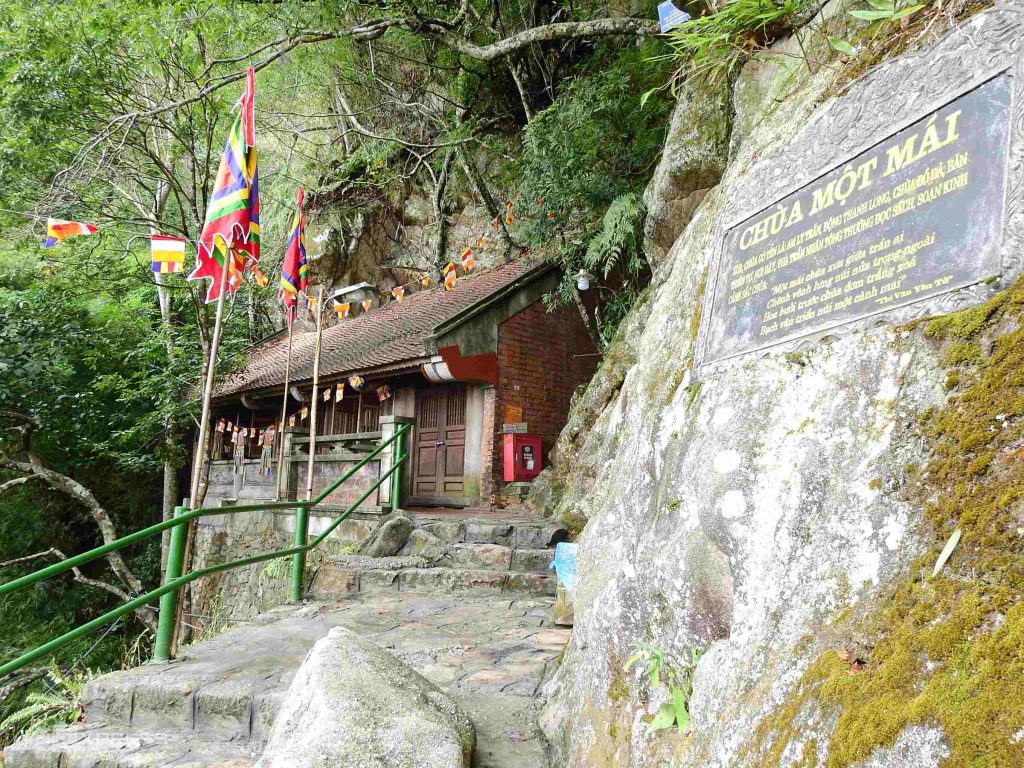
The pagoda was originally Thanh Long Cave, also known as Am Ly Trần (meaning “detachment from the worldly realm”). It was later renamed Bán Thiên, then Bán Mái, and finally Một Mái Pagoda (“One-Roof Pagoda”).
According to legend, King-Monk Trần Nhân Tông (Điều Ngự Giác Hoàng) chose this hermitage as a place for meditation, reading, and composing Buddhist scriptures. It is one of the most unique temples in the Yên Tử pagoda-stupa complex, featuring white stone statues, steles, and worship objects.
An incense burner dating back to 1853 bears the inscription “Phật – Pháp – Tăng, Tam Bảo Kim Cương” (“Buddha – Dharma – Sangha, the Diamond Three Jewels”) along with the esoteric mantra “Om Mani Padme Hum.”
The Bach Long Cable Car system, stretching 900 meters in length, brings visitors closer to Dong Pagoda, located at the sacred peak of Yên Tử.
While seated in the cabin, travelers can enjoy a serene, cloud-floating journey, admiring the panoramic view of the Yên Tử National Forest spread out beneath them.
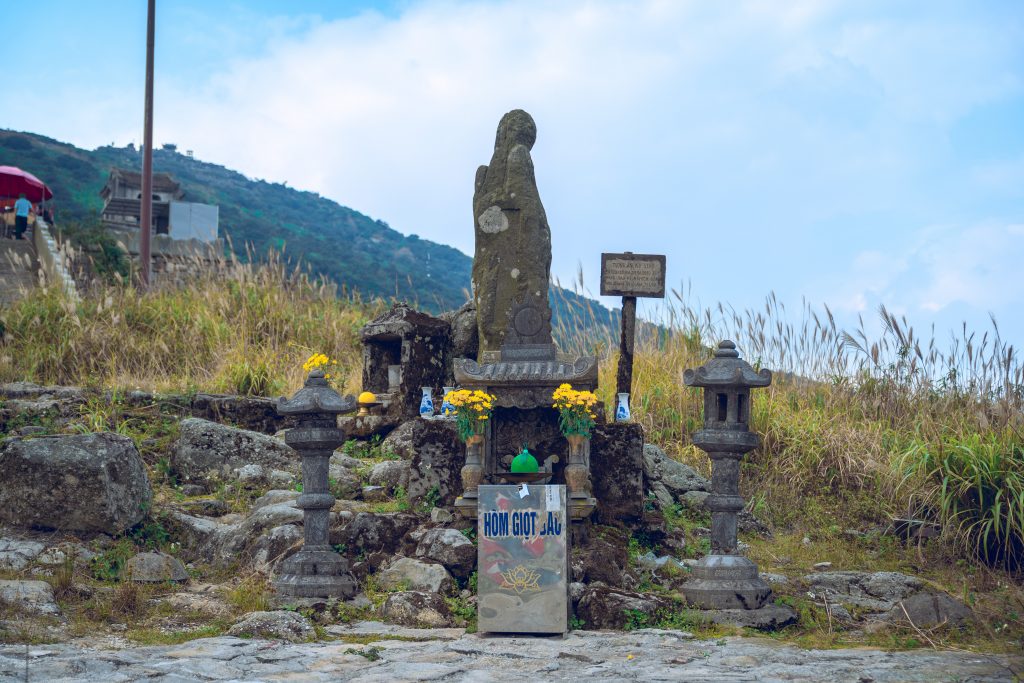
Legend has it that An Ky Sinh was a Taoist hermit from the North who came to Yên Tử in the 3rd century BCE to practice Daoist alchemy and seek the elixir of immortality. He gathered herbs, refined cinnabar and other minerals, and used his knowledge to heal and help people. Out of deep respect, the ancients called him An Tử (“Master An”).
The mountain where he lived was originally known as An Tử Mountain, which was later changed to Yên Tử. The An Ky Sinh Stone Statue is believed to be a natural rock formation that people regard as the transformation of the Taoist himself. The statue resembles a sage standing with hands clasped in reverence, facing westward.
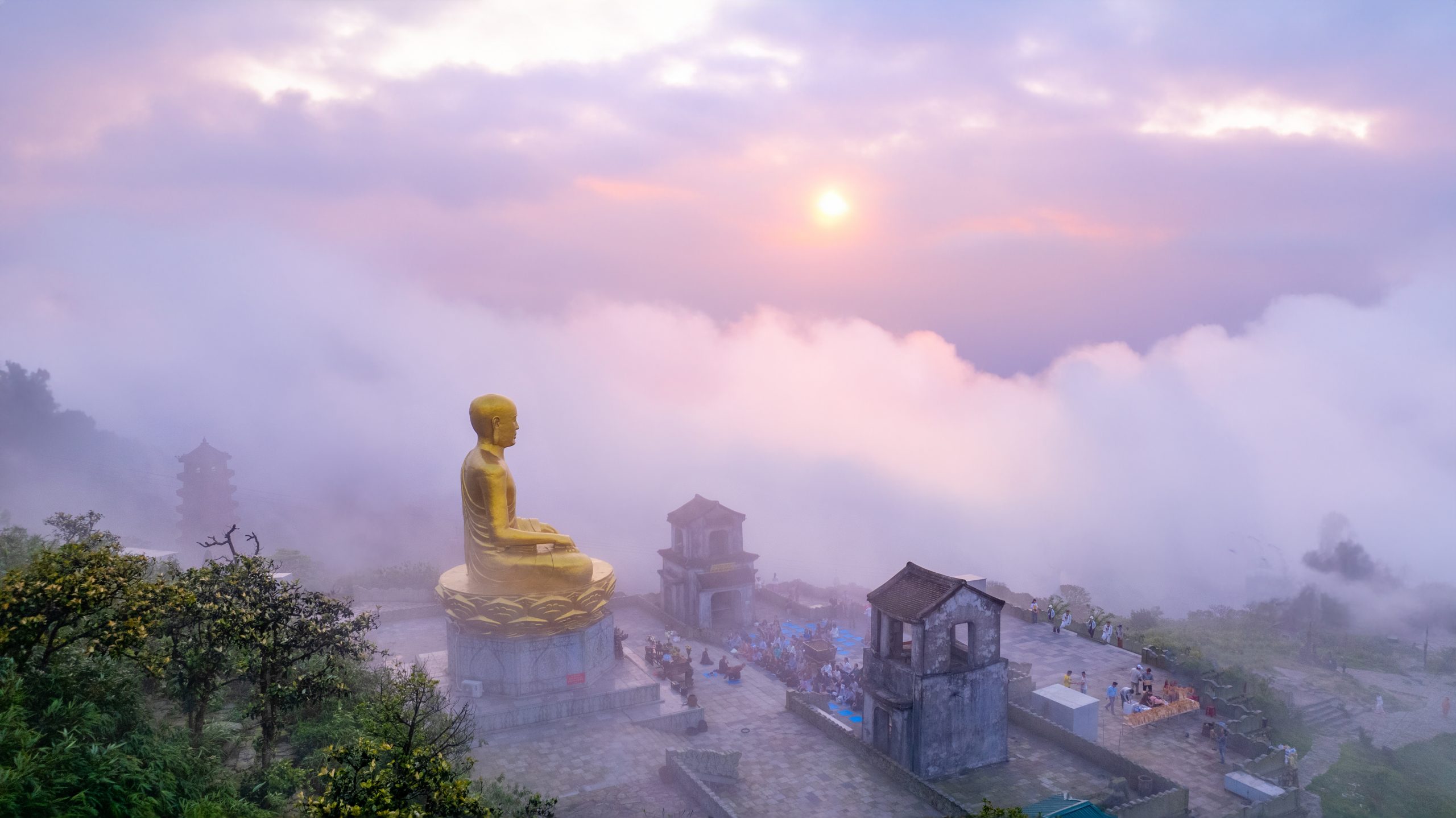
1. Statue of Buddha-Emperor Trần Nhân Tông
The Statue of Buddha-Emperor Trần Nhân Tông was modeled after the original national treasure statue enshrined at Huệ Quang Kim Tháp.
This monolithic bronze statue was cast in one solid piece with raised relief details, showcasing a distinctive bronze-casting artistry of Vietnam. It was inaugurated in 2013 to commemorate the 705th anniversary of Buddha-Emperor Trần Nhân Tông’s attainment of Nirvana, as an expression of profound gratitude for his immense contributions to Buddhism and the nation.
2. Heaven’s Gate
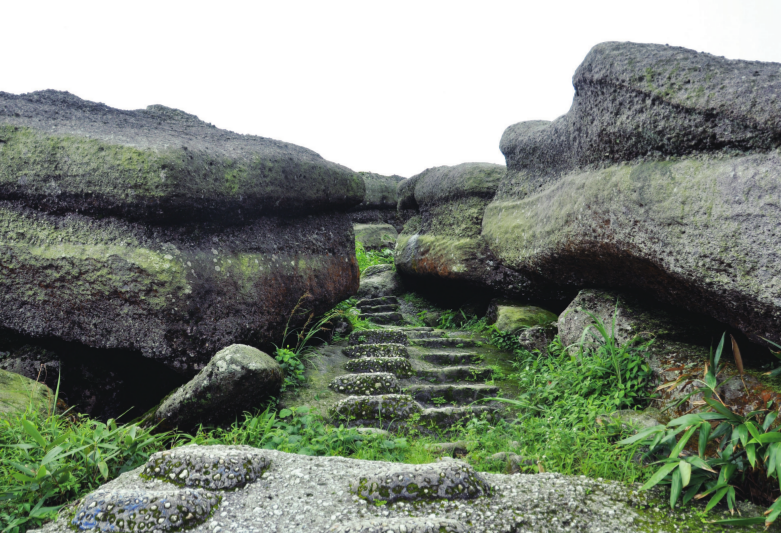
Heaven’s Gate is a narrow passage between massive natural rock formations that visitors must squeeze through as they approach Đồng Pagoda near the sacred peak. It feels like a symbolic gateway between the earthly and spiritual realms, leading one closer to the world of the Buddha.
Surprisingly, even at this high altitude, traces of ancient seashores can be found—such as shell fossils and remnants of mangrove trees—serving as evidence of the geological transformations that occurred millions of years ago.
3. Buddha Stele
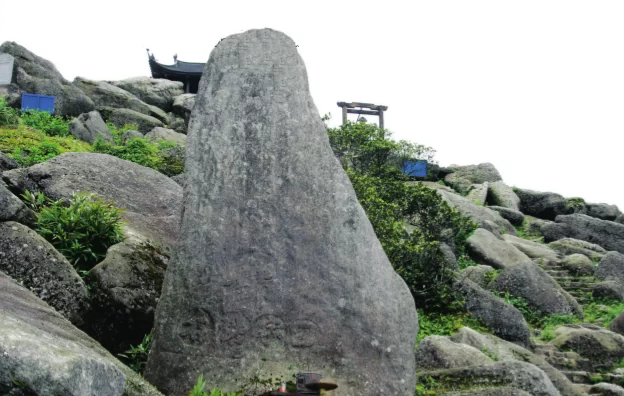
The Buddha Stele is a natural rock slab whose surface resembles an offering cake (oản) traditionally presented to the Buddha. On it are engraved two lines of Chinese characters with eight words: “A-Di-Đà Phật – Tứ Tự Hồng Danh,” meaning “The Four Golden Words: Amitabha Buddha.”
This ancient inscription is proof that the Pure Land practice had been established at Yên Tử long ago, harmoniously coexisting with Zen and Esoteric Buddhism, embodying the spirit of ‘Three Teachings Sharing One Origin’ on this sacred mountain.
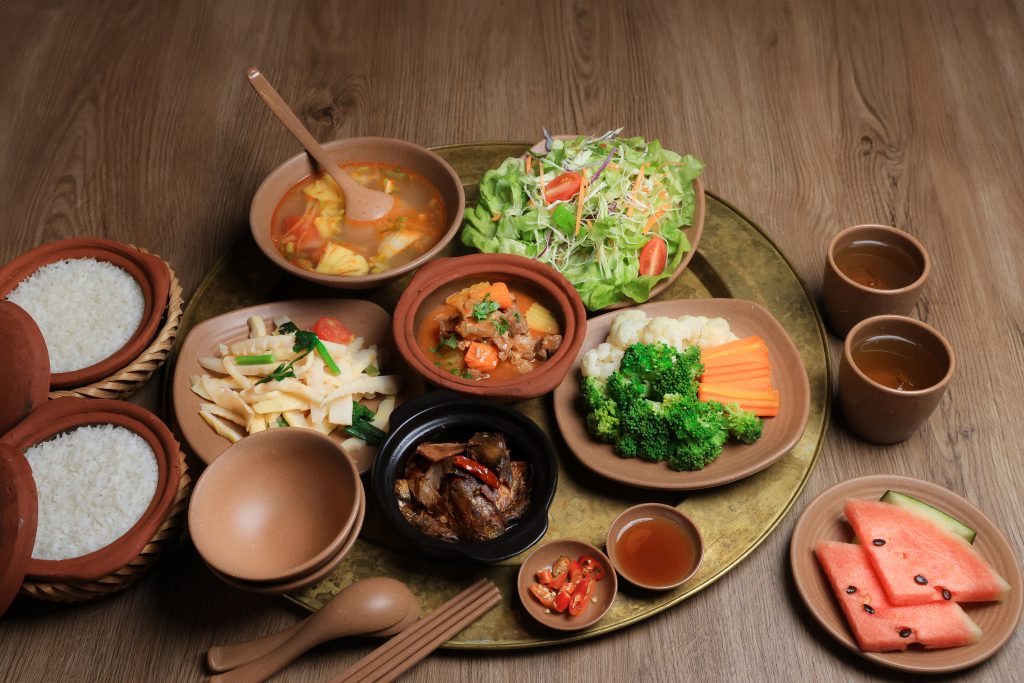
Vietnamese Countryside-Style Lunch
Enjoy a countryside-inspired meal with dishes rich in the authentic flavors of Yên Tử’s mountains and forests.
- Location: Cơm Quê Restaurant at Yên Tử Village
- Reservation Hotline: 0936672388
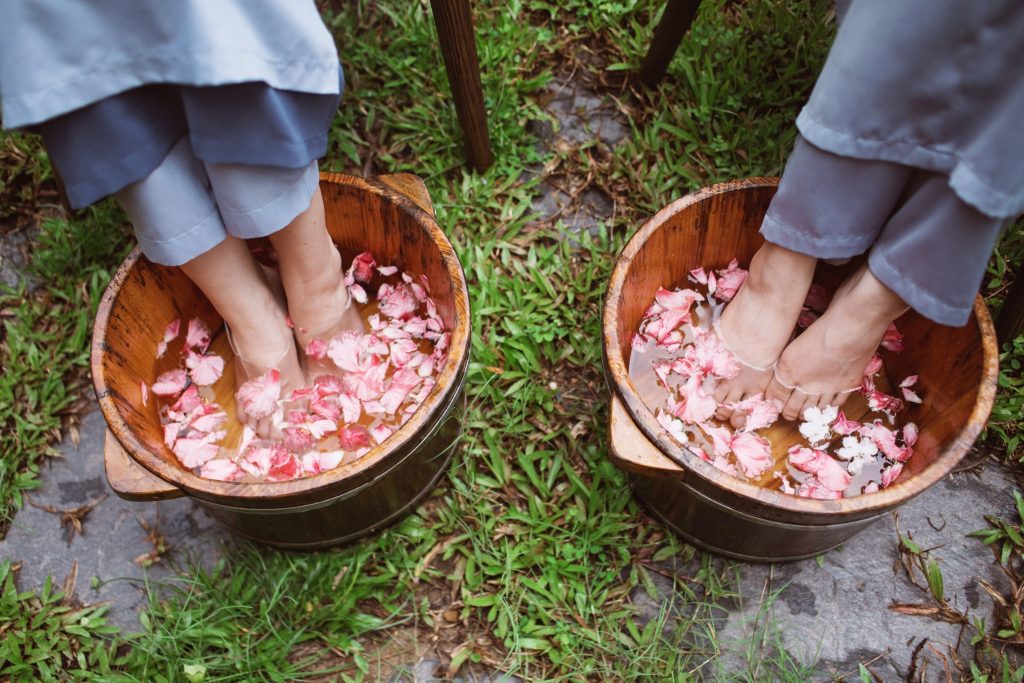
Herbal Foot Soak Experience
A soothing foot therapy using fresh Yên Tử herbs combined with traditional acupressure techniques helps visitors fully recover and relax after a long mountain trek.
Plan your trip


Feedback
