


Yen Tu – A Cultural Heritage and Sacred Site of Vietnamese Buddhism


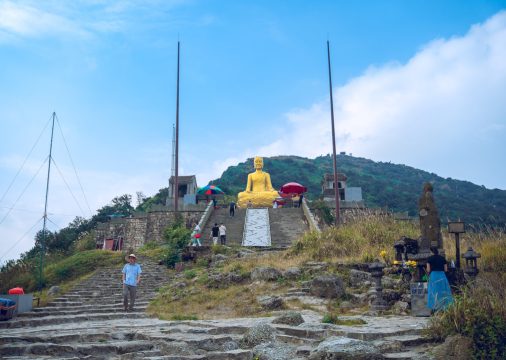
Yen Tu Mountain has long been known as a sacred land of Giao Chau. Beyond its majestic natural scenery, Yen Tu once stood as the backbone and frontier of the Dai Viet kingdom. Today, it remains a spiritual, cultural, political, and socio-economic hub of Vietnam.
THE SACRED LAND OF VIETNAMESE BUDDHISM
Yen Tu is the highest peak of the Dong Trieu range, the final arc among the five fan-shaped mountain ranges of Northern Vietnam. Rising to 1,068 meters, this mountain has been called many names: Elephant Mountain (for its resemblance to an elephant’s back), Phu Van Son (“Floating Cloud Mountain”), Bach Van Son (“White Cloud Mountain”), and Linh Son (“Sacred Mountain”). However, the most well-known name is Yen Tu—named after the hermit An Ky Sinh, who established a meditation retreat and practiced alchemy here over 1,000 years ago.

Ancient Eastern geographers regarded Yen Tu as a sacred energy zone of Giao Chau, where heaven and earth converge, nurturing an environment ideal for spiritual ascension and tranquility.
Over seven centuries ago, King Tran Nhan Tong abdicated his throne to pursue spiritual life on Yen Tu, founding the Truc Lam Zen School – a uniquely Vietnamese Buddhist lineage that promoted unity, compassion, and national wellbeing.
Despite the passage of time and historic upheavals, Yen Tu still preserves 11 ancient pagodas and hundreds of shrines, towers, steles, and statues—each showcasing exquisite architectural, artistic, and sculptural styles of the Ly, Tran, Le, and Nguyen dynasties.
The stone inscriptions at Yen Tu also carry immense historical value. Scholars have used these steles to reconstruct lineages of monks and trace the development of Truc Lam Zen Buddhism across generations.

Beyond its cultural and historical significance, Yen Tu is blessed with extraordinary natural beauty. Nearly 2,700 hectares of primeval forest remain intact, preserving diverse flora and fauna, including many medicinal plants of high therapeutic value. The harmony of rugged mountains, mist-shrouded pagodas, and lush vegetation creates a serene yet majestic landscape.
Recognizing its outstanding values, the Vietnamese Government designated Yen Tu as a Special National Heritage Site (Decision No. 1419/QD-TTg, dated September 27, 2012). In January 2021, the Government tasked Quang Ninh Province with leading efforts to prepare a nomination dossier for the Yen Tu – Vinh Nghiem – Con Son, Kiep Bac Complex to be inscribed on UNESCO’s World Heritage List. On January 26, 2024, the dossier was officially submitted and is scheduled for review during the 47th session of the World Heritage Committee in France this July.
THE ENDURING VALUE OF A CULTURAL HERITAGE
In recent years, preserving and enhancing Yen Tu’s cultural and natural heritage has been a top priority for Quang Ninh Province, Uong Bi City, and related stakeholders. Strategic investments have been made in infrastructure, connecting Yen Tu with the Tran Dynasty Site in Dong Trieu, improving signage and navigation systems, restoring stairways and handrails along the pilgrimage path, and organizing thematic exhibitions on “Tran Dynasty Culture and Yen Tu Buddhism.”

Tung Lam Development JSC, the tourism operator at Yen Tu, has invested in comprehensive facilities: the 133-room Legacy Yen Tu wellness resort, the 700-seat Dien Hong Ballroom, Minh Tam and Hoa Tam squares, and a modern French cable car system connecting Hoa Yen and Dong Pagodas.

In addition, cultural tourism experiences such as Zen meditation, traditional art, culinary showcases, fashion shows, and conferences have made Yen Tu a vibrant year-round destination for both domestic and international visitors.
Yen Tu’s historical and cultural values continue to be upheld and expanded by successive generations, spreading its influence far beyond its mountain slopes.
“The Yen Tu – Vinh Nghiem – Con Son, Kiep Bac Complex represents the enduring vitality of an ancient cultural heritage that still thrives today.
In the spirit of thousands of years of tradition, Quang Ninh, together with Bac Giang and Hai Duong provinces, continues to preserve and promote the diverse cultural, spiritual, archaeological, geological, and natural values of this heritage. These efforts ensure that Vietnam’s legacy will be passed on to future generations and shared with the world.”
— Ms. Nguyen Thi Hanh, Vice Chairwoman of Quang Ninh Provincial People’s Committee




Tin tức phổ biến
Dấu tích đại dương trên Non thiêng Yên Tử
Legacy Yen Tu x Moët Hennessy: Galloping towards bright perspectives

Legacy Yen Tu x CHANEL x Dep – A Quiet Place

UNESCO Recognition of the Yen Tu – Vinh Nghiem – Con Son, Kiep Bac Complex

Yen Tu Recognized as UNESCO World Cultural Heritage Site
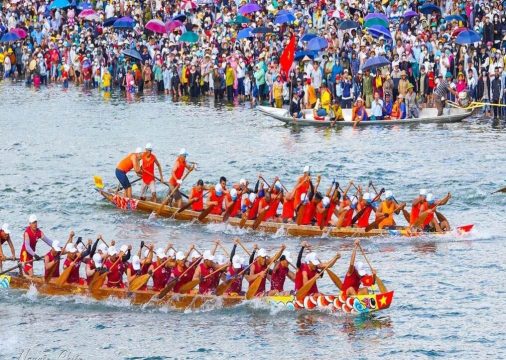
14 Must-Visit Festivals in Quang Ninh: Explore Cultural Heritage
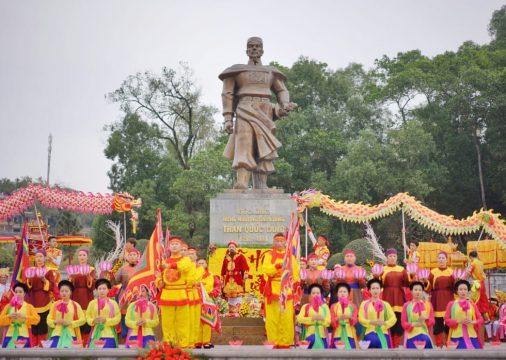
Top 16 Ha Long Festivals: Explore Culture & Traditions in Quang Ninh
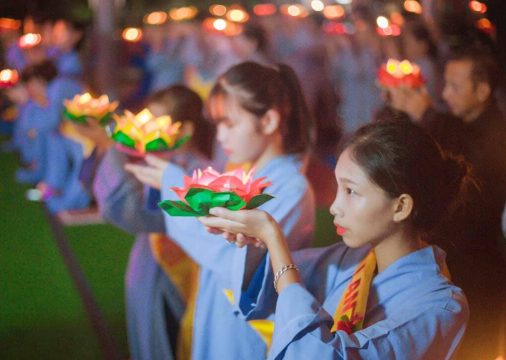
Vu Lan Festival 2025: Origin, Meaning & Guide to Filial Piety
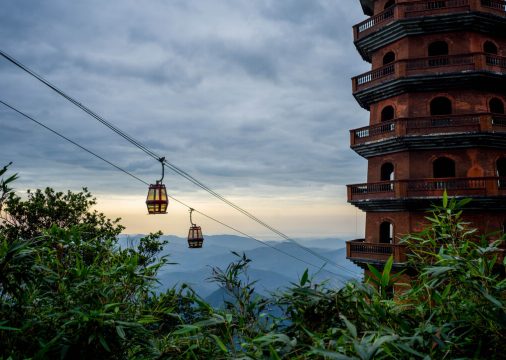
Yen Tu Spring Festival 2025: Origin, Significance & Experience Guide
Emperor-Buddha Tran Nhan Tong of Yen Tu: Biography, Legacy, and Influence