


Emperor-Buddha Tran Nhan Tong of Yen Tu: Biography, Legacy, and Influence


Emperor-Buddha Tran Nhan Tong of Yen Tu is a great historical figure, a talented enlightened monarch, and the founding patriarch of the Truc Lam Yen Tu Zen school – a distinctive lineage of Vietnamese Buddhism. His journey from the throne to the peak of Yen Tu has left profound imprints on the history, culture, and religion of the nation. Join Yen Tu Tung Lam to learn about the life, spiritual journey, and invaluable legacy that Emperor-Buddha Tran Nhan Tong has bequeathed to posterity.
1. Biography of Emperor-Buddha Tran Nhan Tong
Emperor-Buddha Tran Nhan Tong, whose real name was Tran Kham, was born on the 11th day of the 11th month of the Mau Ngo year (December 7, 1258). He was the eldest son of King Tran Thanh Tong and Empress Nguyen Thanh Thien Cam Tran Thi Thieu. According to historical records, from birth, Tran Kham possessed special qualities with “a sharp and dignified appearance, a pure demeanor, a golden complexion, a perfect physique, and a bright spirit,” thus earning him the nickname Kim Tien Dong Tu (Golden Immortal Boy) or Kim Phat (Golden Buddha).

At the age of 16 (1274), Tran Kham was appointed Crown Prince and married the eldest daughter of Prince Hung Dao Tran Quoc Tuan, who later became Empress Kham Tu. Despite living in the royal palace and enjoying a happy marriage, Crown Prince Tran Kham always harbored the aspiration to renounce worldly life and study Buddhism. He repeatedly requested to cede the Crown Prince position to his younger brother, Tran Duc Viep, but his father, the king, did not approve.
When he was 20, Tran Kham once left the Imperial Palace to practice Buddhism on Yen Tu Mountain, but was later sought out by his father and invited back to the capital. Before the king’s guidance, out of responsibility to the nation and filial piety, Tran Kham accepted the important duty of ruling the country.
2. Life and Career of Emperor-Buddha Tran Nhan Tong
The life of Emperor-Buddha Tran Nhan Tong went through many significant stages, from his youth and education to his reign, then abdicating to become Thái Thượng Hoàng (Retired Emperor), and finally his journey of renouncing worldly life to practice Buddhism. Each stage marked brilliant achievements and demonstrated his extraordinary talent and wisdom.
2.1. Youth and Educational Path
From a young age, Crown Prince Tran Kham received an excellent education with many virtuous and talented teachers in the country. General Le Phu Tran (Le Tan) held the position of Grand Tutor cum Royal Instructor, responsible for teaching the Crown Prince. Notably, his father, King Tran Thanh Tong, personally wrote poetry and compiled the book “Di Hau Hoc” to educate his son.
Thanks to diligent study and intelligent aptitude, Tran Kham achieved a high level of proficiency in many fields such as military strategy, music, mathematics, astronomy, medicine, and especially mastery of the three religions: Buddhism, Taoism, and Confucianism. In his study of Buddhism, the Crown Prince studied with Zen Master Tue Trung Thuong Si (Prince Hung Ninh Tran Quoc Tung) and “achieved profound understanding of Zen’s essence,” honoring the Master as his teacher.
The book Thánh Đăng Ngữ Lục (Records of Sacred Lamps) recorded: “His nature was very intelligent and studious, possessing many talents, having read all books, and being thoroughly versed in both inner (Buddhist) and outer (secular) scriptures.” This was the solid foundation of knowledge that later allowed Tran Nhan Tong to become an enlightened king and a Buddhist Patriarch.
2.2. Period of Reign
On the 22nd day of the 10th month of the Mau Dan year (November 8, 1278), Crown Prince Tran Kham ascended the throne, taking the title Tran Nhan Tong. His ascension to the throne took place in a special context when the northern court harbored ambitions of conquering Dai Viet.
During his reign, Emperor-Buddha Tran Nhan Tong twice led the army and people of Dai Viet to defeat the Mongol-Yuan invaders in 1285 and 1288, creating resounding victories in the nation’s history.
Victory over the Mongol-Yuan invaders in 1285
In early 1285, the Mongol-Yuan army arrived at the Nam Quan border, demanding to “borrow a path” to attack Champa. King Tran Nhan Tong resolutely refused and ordered Prince Hung Dao to establish a border defense line. In March of that year, the Mongol-Yuan army officially attacked Dai Viet.
Thanks to thorough preparation and flexible combat strategy, the Dai Viet army successively defeated the invading forces. The enemy general Toa Do and over 50,000 troops were annihilated. On July 9, 1285, King Tran Nhan Tong and the victorious army returned to Thang Long amidst the joy of the entire populace.
Victory over the Mongol-Yuan invaders in 1287-1288
Not content with their previous defeat, in December 1287, the Mongol-Yuan army divided into three naval and land routes to attack Dai Viet for the second time. Learning from the 1283 war, the Dai Viet army applied the “empty-field strategy” (scorched earth), strategically withdrawing and waiting for the opportune moment to counterattack.
By April 19, 1288, on the Bach Dang River, the Dai Viet army delivered a decisive blow, utterly defeating the northern invading force. After this glorious victory, Emperor Tran Nhan Tong recited two immortal verses:
“Xã tắc hai phen chấn ngọa dà Non sông ngàn thuở vững âu vàng” (The nation twice shaken, but stands firm / The mountains and rivers, for a thousand ages, forever secure.)
After the victory, King Tran Nhan Tong implemented a flexible diplomatic policy with the Yuan dynasty to preserve peace, while focusing on national recovery, caring for the people’s lives after the war, and building a prosperous nation.

2.3. Period as Retired Emperor (Thái Thượng Hoàng)
On the 9th day of the 3rd month of the Quy Ty year (April 16, 1293), Emperor Tran Nhan Tong abdicated the throne to Crown Prince Tran Thuyen (Tran Anh Tong) and became Thái Thượng Hoàng (Retired Emperor). In 1294, the Retired Emperor returned to practice Buddhism at Vu Lam Palace (Ninh Binh) but still actively supported the new king in state affairs.
In August 1294, when the Ai Lao army violated the border, the Retired Emperor personally led an expedition to quell them. He also continued to undertake important diplomatic roles, such as presiding over the reception of the Yuan dynasty’s envoys in 1295. In the same year, the Retired Emperor sent an embassy led by Tran Khac Dung and Pham Thao to the Yuan dynasty to request the Tripitaka Buddhist scriptures, and after bringing them back, he had many copies printed for widespread dissemination in the country.
After 6 years of abdicating the throne (1293-1299), the Retired Emperor helped King Tran Anh Tong firmly establish his reign and lead the country in comprehensive development. More than anyone, the Retired Emperor clearly understood that even if the country was at peace, it was still heavily dependent on the North. Without further strong development, it would be difficult to avoid invasion from the northern empire, which always sought to annex Dai Viet.
To solve this problem, the Retired Emperor aimed to find a sustainable development path for Dai Viet and avoid foreign invasion. He found that path in Buddhist philosophy, with its ideas imbued with cause and effect, cultivating wisdom and virtue, uniting people’s hearts, and creating internal strength to build a powerful nation. To help all people access Buddhist Dharma, the Retired Emperor was determined to find a suitable path to practice Buddhism for the people of Dai Viet, so that every person, from farmers to soldiers, even those who were illiterate, could learn Buddhism and practice according to its philosophy.
2.4. Journey of Renunciation and Practice at Yen Tu
In October of the Ky Hoi year (1299), Retired Emperor Tran Nhan Tong officially went to Yen Tu Mountain (Quang Ninh) to renounce worldly life, taking the dharma name Huong Vân Đại Đầu Đà, practicing according to the Dodeca ascetic practices (twelve ascetic practices). His dharma title was Trúc Lâm Đại Đầu Đà or Trúc Lâm Đại Sĩ Giác Hoàng Điều Ngự.
At Yen Tu, Điều Ngự established hermitages, preached, taught the Dharma, and accepted disciples. At that time, Vietnamese Buddhism was influenced by three Zen lineages: Tì Ni Đa Lưu Chi, Thảo Đường, and Vô Ngôn Thông. Điều Ngự absorbed the essence from these lineages and unified them into the Truc Lam Yen Tu Zen school – considered the first unified Buddhist Sangha in Vietnam.
During his 9 years of Buddhist practice, Điều Ngự traveled to many places to spread the Dharma, including pagodas such as: Phổ Minh (Thiên Trường, Nam Định), Sùng Nghiêm (Chí Linh, Hải Dương), Vĩnh Nghiêm (Yên Dũng, Bắc Giang), Báo Ân – Siêu Loại (Gia Lâm, Hà Nội)… He also had many pagodas built and went everywhere in the country to educate people, encouraging monks, nuns, and Buddhists to believe correctly and practice Buddhist Dharma with the core idea of “Buddha in the heart.” At the same time, he corrected governmental affairs, taught people to eliminate superstitions, and cultivate morality according to Buddhist teachings.

Tháng 3 năm 1301, Điều Ngự đến châu Bố Chính (Quảng Bình), dựng am Trí Kiên và tu tại đây một thời gian. Sau đó, Ngài sang nước Chiêm Thành và lưu lại gần một năm để học ngôn ngữ, tìm hiểu văn hóa Phật giáo và xây dựng mối quan hệ hòa hiếu với vương quốc này. Tại đây, Điều Ngự đã hứa gả công chúa Trần Huyền Trân cho vua Chiêm là Chế Mân, người đã từng cùng Đại Việt đánh tan quân xâm lược Nguyên Mông. Như một lễ vật cưới, vua Chiêm đã dâng hai châu Ô và châu Lý cho Đại Việt vào năm 1306 (sau được đổi tên thành châu Thuận và châu Hóa).
Năm 1304, Điều Ngự thu nhận Pháp Loa (Đồng Kiên Cương, 1284-1330) làm đệ tử và đào tạo trở thành người kế vị, Đệ nhị Tổ Trúc Lâm. Ngày mồng 1 Tết Nguyên Đán năm 1308, lễ truyền đăng cho Pháp Loa đã được tổ chức long trọng tại chùa Báo Ân (Siêu Loại, nay thuộc Bắc Ninh).
Trong 9 năm tu Phật, Điều Ngự đã để lại cho Phật giáo Việt Nam một dòng thiền đặc sắc với tinh thần “Phật tại tâm”, khẳng định mỗi người trong tâm đều có Phật tính. Với tư tưởng “Hoa quang đồng trần”, Ngài dạy rằng Phật tính vốn có trong mỗi người như một ngọn đèn, cần được thắp sáng trong tâm mỗi người. Khi toàn dân thấm nhuần tinh thần này, đất nước sẽ rực sáng trí tuệ, đoàn kết vững mạnh, thái bình thịnh trị.
2.5. Entering Nirvana
Tháng 5 năm Đinh Mùi (1307), Trúc Lâm Đại Sĩ về núi Báo Đài, lập am nhỏ trên đỉnh Ngọa Vân để tu tập trong những năm cuối đời. Ngày mồng 1 tháng 11 năm Mậu Thân (December 14, 1308), Điều Ngự an nhiên nhập Niết Bàn tại am Ngọa Vân, hưởng dương 51 tuổi.
Nhục thân của Điều Ngự được trà tỳ tại nơi Ngài viên tịch, và xá lợi được tôn trí ở nhiều nơi: lăng Quy Đức (núi Long Hưng), tháp Huệ Quang tại chùa Hoa Yên (Yên Tử) và chùa Phổ Minh (Thiên Trường). Bên cạnh am Ngọa Vân, Tổ Pháp Loa cho dựng “Phật Hoàng tháp” để lưu giữ xá lợi của Phật hoàng Trần Nhân Tông. Trong lòng tháp đặt bài vị bằng đá xanh với dòng chữ khắc nổi: “Nam mô đệ nhất tổ Trúc Lâm Đầu Đà Tịnh Tuệ Giác Hoàng Trần triều đệ tam Nhân Tông Hoàng đế Điều Ngự vương Phật”. (Translation: Namo the First Patriarch of Truc Lam, the Ascetic Pure Wisdom Enlightened Emperor, the Third Emperor of the Tran Dynasty, Emperor Nhan Tong, the Royal Buddha Who Guides and Controls.)

Triều đình đã dâng miếu hiệu là Nhân Tông, thụy hiệu Pháp Thiên Sùng Đạo Ứng Thế Hóa Dân Long Từ Hiếu Hiển Thánh Văn Thiên Võ Nguyên Minh Duệ Hiếu Hoàng Đế, pháp hiệu Đại Thánh Trần Triều Trúc Lâm Đầu Đà Tịnh Tuệ Giác Hoàng Điều Ngự Tổ Phật.
Việc Điều Ngự chọn núi Báo Đài dựng am Ngọa Vân để tu hành và nhập Niết Bàn có ý nghĩa sâu sắc. Núi Báo Đài thuộc dãy Yên Tử, quanh năm mây phủ, cảnh sắc tuyệt đẹp bốn mùa. Núi này cách Thái miếu nhà Trần không xa, và đường đến am Ngọa Vân phải đi qua Thái miếu. Có thể nói, Điều Ngự đã nhận thấy rõ am Ngọa Vân sẽ trở thành Thánh địa, và những người hậu thế khi hành hương đến đây sẽ phải đi qua Thái miếu nhà Trần, để tưởng nhớ đến một triều đại oanh liệt. Am Ngọa Vân, nơi Phật hoàng Trần Nhân Tông tu hành những ngày cuối đời và nhập Niết Bàn, đã trở thành Thánh địa linh thiêng nhất của Phật giáo Việt Nam.
>>> See more: Truc Lam Yen Tu Zen school – History of formation and development
3. Statue of Emperor-Buddha Tran Nhan Tong on Yen Tu Peak
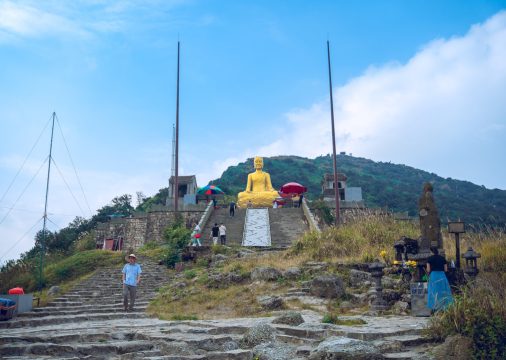
Yen Tu – the most sacred land of Vietnam, a famous historical relic and scenic area, associated with the legend of Emperor-Buddha Tran Nhan Tong, the enlightened monarch who twice led the Dai Viet army and people to defeat the Mongol-Yuan invaders (1285, 1288), after which he renounced worldly life to practice Buddhism and founded the Truc Lam Zen school. Currently, at Yen Tu, there is a revered statue of the Emperor-Buddha that was recognized by the Prime Minister as a National Treasure in 2020.
3.1. Location of the Buddha statue
The statue of Emperor-Buddha Tran Nhan Tong is currently preserved and displayed in Huệ Quang stupa (also known as Patriarch Stupa) at Hoa Yên Pagoda, part of the Special National Relic Site – Yên Tử Scenic and Historical Complex, Uông Bí City, Quảng Ninh Province. The statue is enshrined in the antechamber of the Huệ Quang stupa, where King Trần Anh Tông had it built in 1326 to enshrine the sarira of the Emperor-Buddha.

3.2. Structure of the Buddha statue
In terms of structure, the statue consists of two main parts: the base and the body of the statue, with a total height of 83.8cm. The statue is carved in a relaxed meditative posture, sitting in a half-lotus position with the left foot placed on the right thigh, the sole facing upward. The face of the statue is refined with prominent features such as large ears, a broad forehead, a high neck with many folds, and a graceful figure. The folds of the robe and pants are rendered softly and flexibly with intricate and sharp patterns on the lapel and hem.
3.3. Posture of the Buddha statue
The statue is placed on a rectangular base in the style of “sập chân quỳ dạ cá” (a low table with kneeling fish-belly legs), consisting of two parts: the upper square surface raised like a “Bồ đoàn” (meditation cushion). The front of the base is divided into 5 compartments with meticulously carved decorative patterns. Scientists from the Vietnam Atomic Energy Institute have discovered that the statue may have been painted and gilded.
Compared to other statues of Emperor-Buddha Tran Nhan Tong, the statue at Huệ Quang stupa is identified as a unique artifact, not resembling any other statue in terms of posture, monastic robes, decorative patterns, and even physical form. To this day, this statue has become a model for many statues of the Emperor-Buddha carved elsewhere, such as the statue at An Kỳ Sinh (Yên Tử) inaugurated in 2013 and the statue on Trường Sa Island inaugurated in 2015.
>>> See more: Top 6 most standard prayers for visiting Yen Tu Pagoda
4. Legacy and Influence of Emperor-Buddha Tran Nhan Tong
Emperor-Buddha Tran Nhan Tong left a rich legacy from founding the Truc Lam Zen school to profound philosophical ideas. His influence on Vietnamese culture and religion still resonates today.
4.1. Founding the Truc Lam Yen Tu Zen School
One of the greatest legacies left by Emperor-Buddha Tran Nhan Tong is the founding of the Truc Lam Yen Tu Zen school – the first purely Vietnamese Zen lineage, inheriting the essence of the three existing Zen lineages in Vietnam: Tì Ni Đa Lưu Chi, Vô Ngôn Thông, and Thảo Đường.
The birth of the Truc Lam Zen school marked a significant turning point in the history of Vietnamese Buddhism, demonstrating the spirit of independence, self-reliance, and national identity. He built a unified Sangha organizational system with a network of pagodas, institutes, hermitages, and monasteries stretching from North to South.
4.2. The “Cu Tran Lac Dao” Philosophy
One of the most important contributions of the Emperor-Buddha is the “Cu Tran Lac Dao” (Living in the World and Enjoying the Way) philosophy, clearly expressed in the prose poem of the same name composed by himself. This “engaged” spirit helped Buddhism deeply penetrate the daily lives of the Vietnamese people, from kings and mandarins to common folk.
With the “Buddha in the heart” philosophy, the Emperor-Buddha simplified Buddhist teachings, teaching that everyone possesses inherent Buddha-nature, needing only to return to their own pure mind.

4.3. Literary and Artistic Legacy
Emperor-Buddha Tran Nhan Tong also left a rich literary legacy with many highly valuable works, demonstrating his literary talent and profound philosophical ideas. Typical works include:
- “Thiền Lâm Thiết Chủy Ngữ Lục”: a collection of his lectures and Dharma talks
- “Cư Trần Lạc Đạo Phú”: expressing the central idea of the Truc Lam Zen school
- “Đắc Thú Lâm Tuyền Thành Đạo Ca”: describing the joy of attaining enlightenment amidst nature
- “Thạch Thất Mỵ Ngữ”: teachings on meditation in the stone hermitage
- “Đại Hương Hải Ấn Thi Tập”: a poetry collection expressing his inner state and thoughts
In addition, the Buddhist architectural works built during his time, such as the system of pagodas and stupas on Yen Tu Mountain, are also valuable artistic legacies. These works demonstrate the harmonious blend of Buddhist architectural art with indigenous Vietnamese culture, creating a unique architectural style of the Tran dynasty.
4.4. Influence on Vietnamese Culture and Religion
The Truc Lam Zen school founded by him became the orthodox Zen lineage of Vietnamese Buddhism, existing and developing for many centuries up to the present day. The spirit of “harmonious coexistence of the three religions” (Buddhism – Confucianism – Taoism) that he advocated created an open and harmonious mindset in the religious beliefs of the Vietnamese people.
Buddhism during his time was not merely a pure religion but was also closely associated with the cause of nation-building and national defense, with the spirit of the nation and Vietnamese cultural identity.

4.5. Reverence and Remembrance by Posterity
More than seven centuries have passed since Emperor-Buddha Tran Nhan Tong entered Nirvana, but the reverence and remembrance of posterity for him have not faded. The Emperor-Buddha is worshipped in almost all major pagodas belonging to the Truc Lam lineage throughout the country.
Annually, many major festivals are organized to commemorate him, especially the Yen Tu Festival (Quang Ninh), which attracts millions of visitors and Buddhists. Many research works on the life and thoughts of the Emperor-Buddha continue to be carried out, contributing to clarifying his immense role and contributions to Vietnamese history, culture, and religion.
Related articles:
- Giai Oan Stream: Deciphering the mystery of the sacred Yen Tu stream
- History of Dong Pagoda, Yen Tu – Dong Pagoda travel experience
The journey to learn about Emperor-Buddha Tran Nhan Tong of Yen Tu through this article by Yen Tu Tung Lam has helped us clearly see his immense influence on Vietnamese Buddhism and culture. From the legacy of the Truc Lam Zen school to the “Cu tran lac dao” philosophy, he has left an indelible mark on the nation’s history.




Tin tức phổ biến
Dấu tích đại dương trên Non thiêng Yên Tử
Legacy Yen Tu x Moët Hennessy: Galloping towards bright perspectives

Legacy Yen Tu x CHANEL x Dep – A Quiet Place

UNESCO Recognition of the Yen Tu – Vinh Nghiem – Con Son, Kiep Bac Complex

Yen Tu Recognized as UNESCO World Cultural Heritage Site
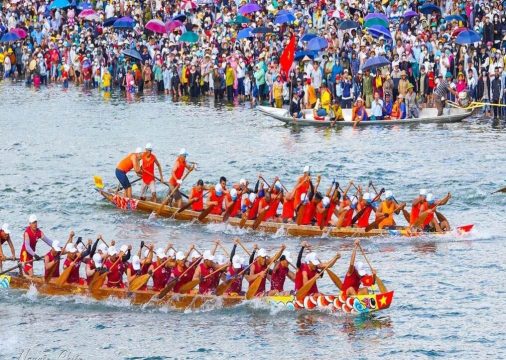
14 Must-Visit Festivals in Quang Ninh: Explore Cultural Heritage
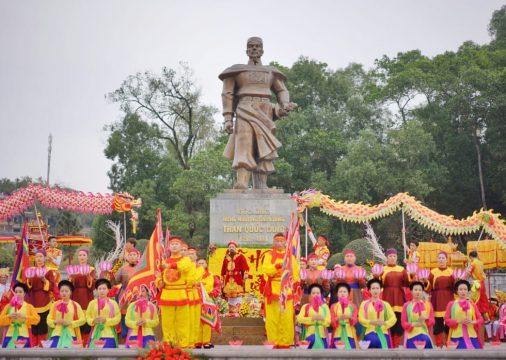
Top 16 Ha Long Festivals: Explore Culture & Traditions in Quang Ninh
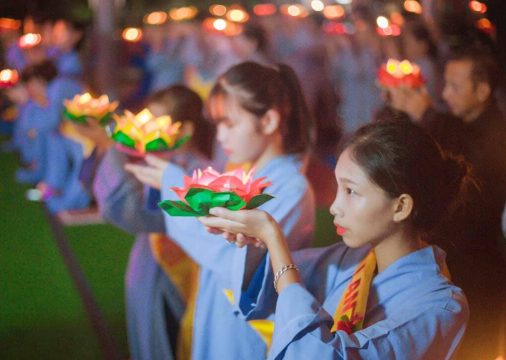
Vu Lan Festival 2025: Origin, Meaning & Guide to Filial Piety
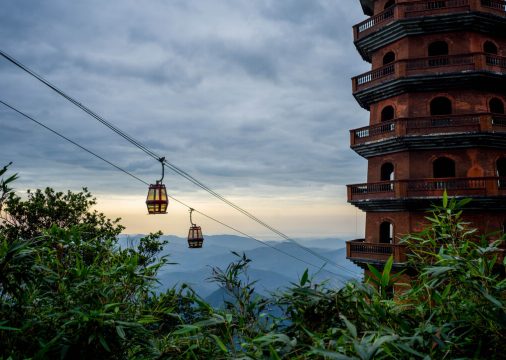
Yen Tu Spring Festival 2025: Origin, Significance & Experience Guide
Emperor-Buddha Tran Nhan Tong of Yen Tu: Biography, Legacy, and Influence