


Yen Tu Spring Festival 2025: Origin, Significance & Experience Guide


The Yen Tu Spring Festival is one of the long-standing traditional festivals that carries deep cultural and spiritual significance in Vietnam. Closely associated with Emperor-Buddha Tran Nhan Tong and the Truc Lam Zen school, the festival is rich in Vietnamese cultural and historical values. In this article, Yen Tu Tung Lam will guide you to explore the origin, profound meaning, and three distinctive parts of the festival, opening the door to the sacred Buddhist land.
1. Origin and Significance of the Yen Tu Spring Festival
To better understand the cultural and spiritual value of the Yen Tu Spring Festival, let us delve into its history and the profound meanings it brings.
1.1. Origin of the Yen Tu Spring Festival
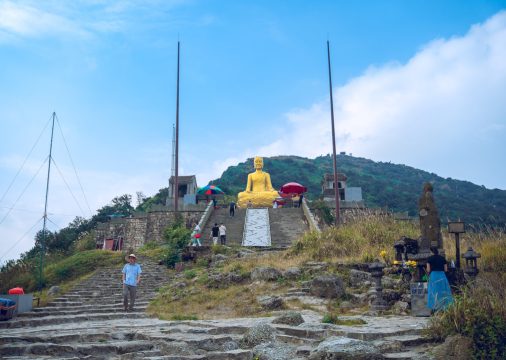
The Yen Tu mountain range is located in Thuong Yen Cong Commune, about 14km from the center of Uong Bi City. This relic complex includes a system of pagodas, stupas, hermitages, Buddha statues, and majestic natural landscapes. Before being called Yen Tu, this mountain was also known as Elephant Mountain due to its shape resembling a gigantic elephant standing tall amidst the sky and mountains. The beauty here is covered by white clouds year-round, sometimes obscuring the ancient pagodas and towering stupas nestled beside forests and streams. Therefore, Vietnamese dynasties ranked Yen Tu among the nation’s “famous mountains.”
Yen Tu Pagoda is considered the ancestral land of Vietnamese Buddhism during the Dai Viet era. After abdicating the throne, Emperor Tran Nhan Tong came here to practice and founded the Truc Lam Zen school – a distinctive Vietnamese Buddhist lineage. Therefore, every spring, Yen Tu Pagoda vibrantly organizes the festival to honor the meritorious deeds of Emperor-Buddha Tran Nhan Tong.

1.2. Cultural Significance of the Yen Tu Spring Festival
The Yen Tu Spring Festival embodies the spirit of engaged Buddhism in Vietnam, harmoniously combining spiritual practice with worldly life. The Truc Lam Zen school emphasizes practicing meditation within daily life. When participating in the festival, visitors not only go on pilgrimage but also practice mindful living, aiming for a balance between spirituality and everyday life.
The Yen Tu Spring Festival is an occasion for people from all over to flock here to pray for peace, good fortune, and prosperity for the new year. Additionally, the festival contributes to the preservation and promotion of the cultural and historical values of Yen Tu scenic area. With its majestic landscape and ancient pagoda-stupa system, this place has become an important destination for spiritual tourism. Organizing the annual festival not only helps spread profound spiritual values but also promotes local tourism economic development.
2. When and Where the Yen Tu Spring Festival Takes Place
The Yen Tu Spring Festival in 2025 will officially open on February 7, 2025 (the 10th day of the first lunar month) at the Truc Lam Yen Tu Cultural Center, located on Yen Tu Mountain, Thuong Yen Cong Commune, Uong Bi City, Quang Ninh Province. This is an important festival, lasting throughout the three spring months and attracting tens of thousands of Buddhists and pilgrims from all directions to pay homage and visit.
>>> See more: Emperor-Buddha Tran Nhan Tong of Yen Tu – Life, practice & legacy
3. Parts of the Yen Tu Spring Festival
The Yen Tu Spring Festival includes many rich activities that take place throughout the three spring months. Below are the main parts of the festival that visitors should not miss when making a pilgrimage to this sacred land.
3.1. Preparatory Stage for the Festival Opening
Before the official opening day of the festival, at Trinh Pagoda – Yen Tu, the Provincial Buddhist Sangha will organize the ceremony to open the Yen Tu forest. During this ceremony, monks and local people will offer incense, chant sutras, pay respects to heaven and earth, to the Buddhist patriarchs, and to the mountain deities, praying for a peaceful and auspicious festival season. This is considered an important opening ritual, demonstrating reverence and seeking permission from the deities before the festival begins.
3.2. Festival Opening Ceremony
The opening ceremony will be held on the morning of the 10th day at the Truc Lam Yen Tu Cultural Center with solemn rituals carrying profound educational significance. Here, venerable monks and abbots will perform rituals to pray for national peace and prosperity. Subsequently, delegates will take turns stamping the sacred Yen Tu seal.
To enhance the festival’s unique atmosphere, large-scale cultural performances featuring famous artists from within and outside the province will be interspersed, contributing to a joyful ambiance welcoming the festival season. Additionally, the ceremonial part will include other interesting activities such as bell-ringing, drum-beating, and New Year blessings, all very unique.

3.3. Activities After the Opening Ceremony
After the opening ceremony concludes, visitors have the opportunity to explore the Festival Center area, ascend the mountain to worship Buddha, visit the pilgrimage village, or participate in exciting folk games such as: “ném còn” (tossing shuttlecock), tug-of-war, cockfighting, the Yen Tu Chess King tournament… Visitors can also enjoy unique performances such as: traditional folk arts at the Yen Tu pilgrimage village communal house area, traditional martial arts, and dragon dance.
During this time, thousands of people will begin their pilgrimage to worship Buddha in continuous streams, gradually moving up to the peak of Yen Tu Mountain – home to the sacred and ancient Dong Pagoda. The path to the mountaintop is quite rugged and winding, enveloped by the shade of giant ancient trees and a misty haze, creating a feeling of entering the Buddhist realm.

4. Tips for Attending the Yen Tu Festival
To have a convenient and meaningful spring pilgrimage to the Yen Tu Spring Festival, visitors should be aware of information regarding transportation and entrance fees.
4.1. How to Get to Yen Tu
Visitors can reach Yen Tu from two major Vietnamese cities, Hanoi Capital and Ho Chi Minh City, with the following transportation options:
From Hanoi to Yen Tu:
- By private car or motorbike:
- Approximately 130km, taking 2.5 – 3 hours.
- Route: Hanoi → National Highway 18 via Bac Ninh → Uong Bi, Quang Ninh → Trinh Pagoda → Yen Tu.
- The road is quite convenient, mainly expressways and national highways.
- By coach:
- Take a bus from My Dinh, Giap Bat, or Gia Lam bus stations on routes to Uong Bi, Ha Long.
- Get off at Doc Do T-junction (about 10km from Yen Tu).
- Continue by taxi or motorbike taxi to the foot of Yen Tu Mountain.

From Ho Chi Minh City to Yen Tu:
- By plane:
- Fly from Ho Chi Minh City to Noi Bai Airport (Hanoi) or Van Don Airport (Quang Ninh).
- Flight time is about 2 hours; ticket prices vary depending on the time.
- From the airport to Yen Tu:
- From Noi Bai: Take a coach or private car to Yen Tu following the route Hanoi → Bac Ninh → Uong Bi → Yen Tu (takes about 3-4 hours).
- From Van Don: Take a taxi or bus to Uong Bi, then continue to Yen Tu (takes about 1.5 – 2 hours).
4.2. Yen Tu Entrance Fees
Ticket prices may change according to the policies of the relic management board and the time of visit. Below are the specific fees, including entrance tickets and cable car tickets, to help visitors choose suitable transportation options:
- Entrance fee for Yen Tu scenic spot: 40,000 VND/adult; 20,000 VND/child aged 6-15.
- Cable car ticket: For convenient travel, visitors can choose to use the cable car service with the following prices:
- Round trip ticket for 2 routes: 380,000 VND/person.
- Round trip ticket for 1 route: 340,000 VND/person.
- One-way ticket for 2 routes: 340,000 VND/person.
(Ticket prices updated in February 2025 and may change depending on the time.)

>>> See more: Truc Lam Yen Tu Zen school – History of formation and development
5. Things to Note When Attending the Festival
To have a memorable spring trip at the Yen Tu Spring Festival, visitors should note some important points:
- Regarding attire: Choose modest and polite clothing as Yen Tu is a sacred place. Avoid tight-fitting clothes, as they are not only inappropriate in crowded places but also make movement difficult. With a long journey of over 6km and many steep stone steps to overcome, visitors should wear sports shoes for comfortable and safe movement.
- Prepare necessary items: The long journey can easily cause fatigue, so bring water, a walking stick, and a phone to rest and check-in, capturing beautiful moments along the way.

Related articles:
- Top 6 most standard prayers for visiting Yen Tu Pagoda
- Giai Oan Stream: Deciphering the mystery of the sacred Yen Tu stream
The Yen Tu Spring Festival is not only an occasion for pilgrimage and prayers for peace but also a journey back to the roots of national culture. Through the three distinctive parts of the festival, visitors will feel the intertwining of spirituality and tradition. Yen Tu Tung Lam hopes you will have meaningful experiences immersing yourself in the sacred atmosphere of the Yen Tu Spring Festival.




Tin tức phổ biến
Dấu tích đại dương trên Non thiêng Yên Tử
Legacy Yen Tu x Moët Hennessy: Galloping towards bright perspectives

Legacy Yen Tu x CHANEL x Dep – A Quiet Place

UNESCO Recognition of the Yen Tu – Vinh Nghiem – Con Son, Kiep Bac Complex

Yen Tu Recognized as UNESCO World Cultural Heritage Site
14 Must-Visit Festivals in Quang Ninh: Explore Cultural Heritage
Top 16 Ha Long Festivals: Explore Culture & Traditions in Quang Ninh
Vu Lan Festival 2025: Origin, Meaning & Guide to Filial Piety
Yen Tu Spring Festival 2025: Origin, Significance & Experience Guide
Emperor-Buddha Tran Nhan Tong of Yen Tu: Biography, Legacy, and Influence